Beef Cuts Chart
Knowing where a cut comes from on the animal tells you most of what you need to cook it. Muscles that work hard — shoulder, legs, chest — are flavourful but tough and suit slow cooking; the rarely used muscles along the back are tender and suit quick, hot cooking. Click a primal cut on the diagram to see its retail cuts and how to cook them.
- Free to use
- No sign-up
- Runs in your browser
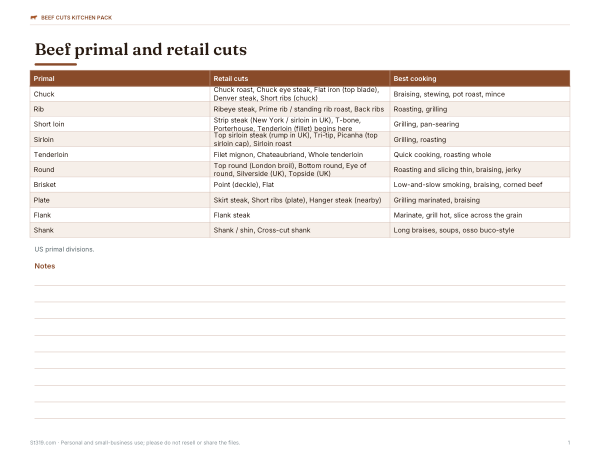
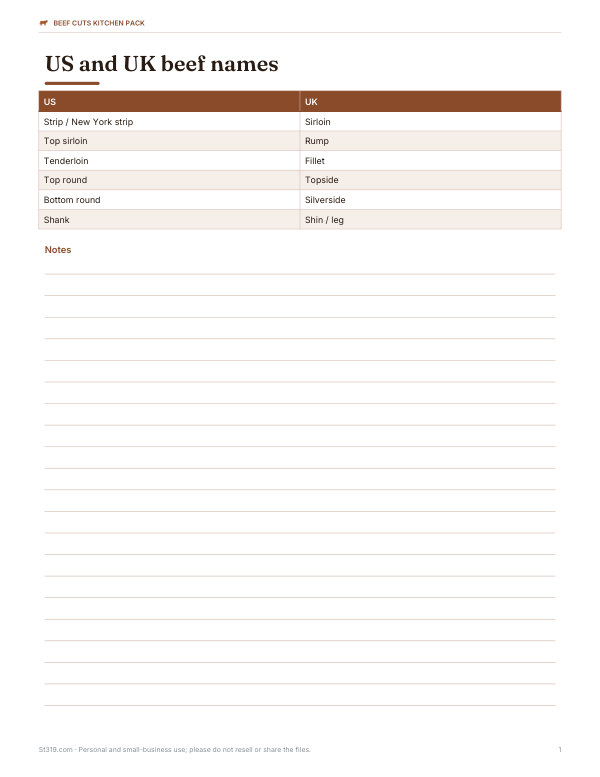
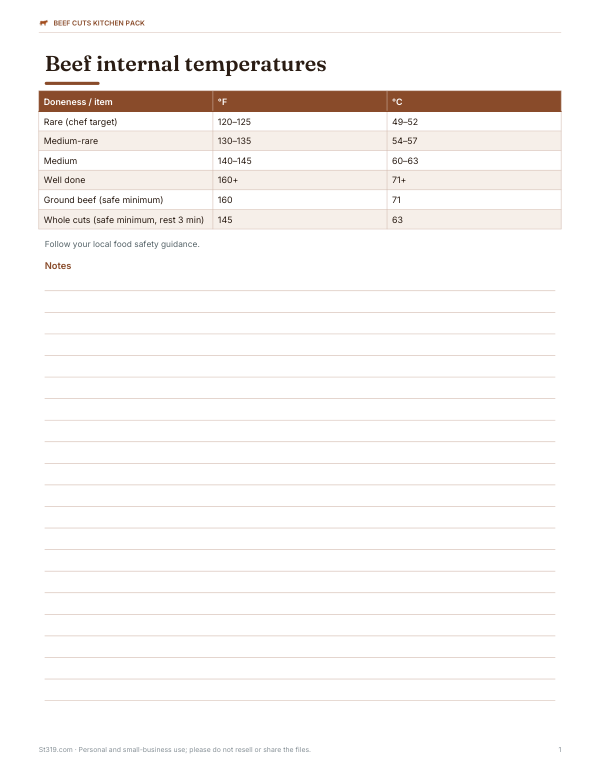
Beef cuts diagram
Beef Cuts Kitchen Pack
Printable beef cuts chart, cooking method guide by cut, US/UK name converter, internal temperature card and a meal planning sheet.
- Cuts chart (PDF/XLSX)
- Name converter (PDF)
- Temperature card (PDF)
- Meal planner (PDF/DOCX/XLSX)
Formats: PDF, XLSX, DOCX. Instant download after payment (link valid 72 hours, up to 5 downloads). AI-assisted: the templates were drafted with AI help and reviewed and laid out before publishing.
$3.00 USD, one-time 4 files · about $0.75 each
- Instant download
- 7-day refund
- Secure checkout by Stripe
7-day money-back guarantee. Full refund within 7 days of purchase, even after you download.
Free sample: Beef Cuts Chart (PDF, 58 KB)
Full refund within 7 days — see the refund policy and license.
Free printables
Single sheets you can print right now, no sign-up. The full pack adds every sheet in one download plus the editable files.
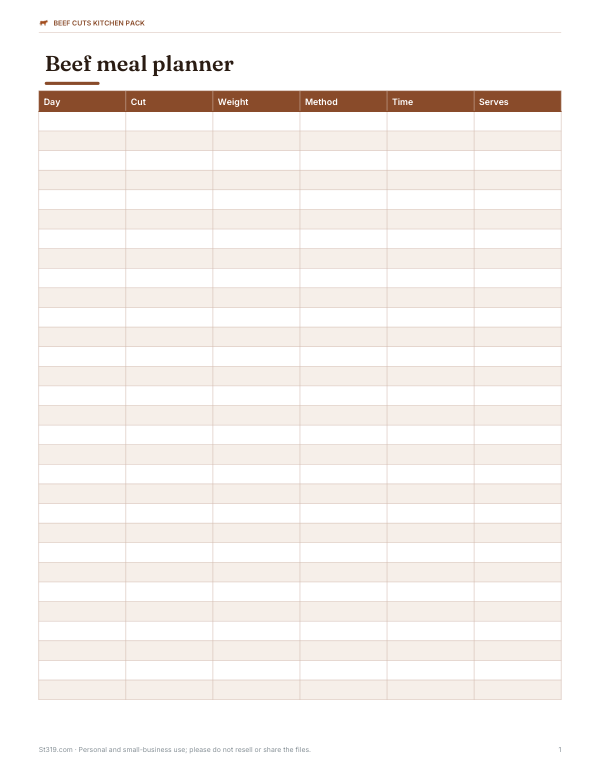 Printable Beef Meal Planner
Primal cuts and what they are best for
| Primal | Where | Tenderness | Best cooking |
|---|---|---|---|
| Chuck | Shoulder | Well-exercised, flavourful, lots of connective tissue | Braising, stewing, pot roast, mince |
| Rib | Upper back, ribs 6–12 | Tender, well-marbled | Roasting, grilling |
| Short loin | Middle back | Very tender | Grilling, pan-searing |
| Sirloin | Rear back, before the round | Fairly tender, lean | Grilling, roasting |
| Tenderloin | Inside the loin | The most tender muscle, mild flavour | Quick cooking, roasting whole |
| Round | Rear leg | Lean, can be tough | Roasting and slicing thin, braising, jerky |
| Brisket | Breast | Tough, rich in collagen | Low-and-slow smoking, braising, corned beef |
| Plate | Belly under the rib | Fatty, flavourful | Grilling marinated, braising |
| Flank | Belly under the loin | Lean, long fibres | Marinate, grill hot, slice across the grain |
| Shank | Legs | Very tough, lots of collagen | Long braises, soups, osso buco-style |
The diagram follows the common US way of dividing a carcass into primals. Butchers in other countries cut differently, so names and boundaries vary — the UK, for example, uses “rump” for much of what the US calls sirloin, and “sirloin” for the US strip loin.
Tender vs tough cuts: cook them differently
| Cut type | Examples | Method | Why |
|---|---|---|---|
| Tender, little connective tissue | Tenderloin, ribeye, strip, top sirloin | Grill, pan-sear, roast; serve medium-rare to medium | Long cooking dries them out |
| Tough, lots of collagen | Chuck, brisket, shank, short ribs | Braise, stew, smoke low and slow | Collagen melts into gelatine after hours of gentle heat |
| Lean but chewy | Flank, skirt, round | Marinate, cook hot and fast, slice thinly across the grain | Short fibres are more tender to eat |
US and UK names
| US | UK / Commonwealth |
|---|---|
| Strip steak (New York strip) | Sirloin steak |
| Top sirloin | Rump steak |
| Tenderloin / filet mignon | Fillet |
| Top round | Topside |
| Bottom round | Silverside |
| Chuck | Chuck and blade |
| Short ribs | Short ribs / Jacob’s ladder |
| Shank | Shin (front) / leg (hind) |
Names also differ within countries and between butchers, so asking the butcher which muscle a cut comes from is the most reliable approach.
Worked example
Planning a dinner for six: clicking “Rib” shows the ribeye steak and standing rib roast — tender, well-marbled cuts suited to roasting. A three-bone rib roast serves about six. For a cheaper Sunday meal, clicking “Chuck” shows the chuck roast, ideal for a slow pot roast of three to four hours until fork-tender. For fajitas, the search finds “skirt steak” under Plate: marinate it, sear it hot and slice thinly across the grain.
Safe cooking temperatures
| Beef | Minimum internal temperature (US guidance) |
|---|---|
| Steaks, roasts, chops | 145 °F (63 °C) with a 3-minute rest |
| Ground beef | 160 °F (71 °C) |
| Doneness (common chef targets for tender cuts) | Rare ~120–125 °F, medium-rare ~130–135 °F, medium ~140–145 °F (before resting) |
Food safety agencies recommend the minimum temperatures shown; many cooks serve whole-muscle steaks rarer, which is a personal choice. Ground beef should always be cooked through because surface bacteria are mixed throughout. Use an instant-read thermometer in the thickest part.
How much to buy
| Cut | Per person (uncooked) |
|---|---|
| Boneless steak or roast | About 6–8 oz (170–225 g) |
| Bone-in roast | About 12 oz–1 lb (340–450 g) |
| Short ribs | About 1 lb (450 g) |
| Brisket (loses weight while smoking) | About 8–12 oz (225–340 g) raw per person |
| Mince for burgers | About 4–6 oz (115–170 g) |
Appetites and side dishes vary; these are common planning figures.
Buying tips
- Look for fine, even marbling in steaks — it adds flavour and juiciness.
- Bright cherry-red colour is typical of fresh beef; vacuum-packed beef is darker purple until exposed to air.
- Grades (such as USDA Prime, Choice and Select) reflect marbling and maturity in the US; other countries use different systems.
- Tougher cuts are cheaper and just as delicious when cooked slowly.
- Ask the butcher to trim, tie roasts or cut steaks to your preferred thickness.
Cooking methods at a glance
| Method | Best cuts | Tips |
|---|---|---|
| Grilling / barbecuing | Ribeye, strip, T-bone, sirloin, flank, skirt | Hot fire; rest before slicing |
| Pan-searing | Filet, strip, flat iron | Dry the surface; very hot pan; finish in oven for thick steaks |
| Roasting | Rib roast, tenderloin, top sirloin, eye of round | Use a thermometer; rest 10–20 min |
| Braising / pot roast | Chuck, short ribs, shank, brisket | Low heat, covered, 2.5–4 hours |
| Smoking | Brisket, short ribs, chuck roll, tri-tip | Low and slow; brisket often 10+ hours |
| Stewing | Chuck, round, shank | Cut into cubes; simmer until tender |
| Stir-frying | Flank, skirt, sirloin | Slice thin across the grain; cook fast |
Slicing against the grain
Muscle fibres run in one direction. Slicing across them — against the grain — cuts the fibres into short pieces that are easier to chew, which matters most for flank, skirt, brisket and round. Look for the lines on the surface of the cooked meat and cut at right angles to them.
Privacy
The diagram runs in your browser.
Frequently asked questions
What are the primal cuts of beef?
Chuck, rib, loin (short loin and sirloin, with the tenderloin inside), round, brisket, plate, flank and shank.
What is the most tender cut of beef?
The tenderloin (filet mignon).
Where does ribeye come from?
The rib primal, along the upper back.
What cut is best for pot roast?
Chuck roast.
What is brisket?
The breast; a tough cut that becomes tender with long, slow cooking or smoking.
Is UK sirloin the same as US sirloin?
No — UK sirloin is closer to the US strip loin; US top sirloin is similar to UK rump.